
Stjernehelg 12.-14.desember Fagerheim Fjellstugu
Det blir ny stjernehelg på Fagerheim Fjellstugu 12. – 14 desember der vi kan se på stjernehimmelen og meteorsvermen Geminidene hvis det blir klarvær.
Enkelt foredrag fredag kl. 19 om teleskoper og hva vi kan se på stjernehimmelen
Lørdag ettermiddag blir det populærvitenskapelig foredrag.
Stjernehelg-tilbudet inkluderer en enkel varmrett på fredag ettermiddag / kveld, frokost middag og lunsj på lørdag, samt frokost søndag. Pris kost og losji kr 2500.- pr person. Påmelding 92258498, eller post@fagerheim-fjellstugu.no
Hilsen
Norsk Astronomisk Selskap

The Geminids are a shooting star shower that is active for large parts of December each year. It was described for the first time 150 years ago and has the greatest activity of 13 and 14 December each year. The moon is new December 18th so conditions should be about as good as for the leonids a month before. It lasts in all from November 19th to December 24th as we pass trough the debris of the source asteroid/comet Phaeton, but is stongest in midmonth December. (more in English further down in the article)
Geminidene er en stjerneskuddsverm som er aktiv store deler av desember hvert år. Den ble beskrevet først gang for 150 år siden og har størst aktivitet på 13. og 14.desember hvert år. Månen er ny 18.desember så forholdene skulle være omtrent like gode som for Leonidene en måned før. Svermen varer fra 19.november til 24.desember når vi passerer gjennom støv og stein fra komet/asteroide Phaeton, men er sterkest midt i desember.
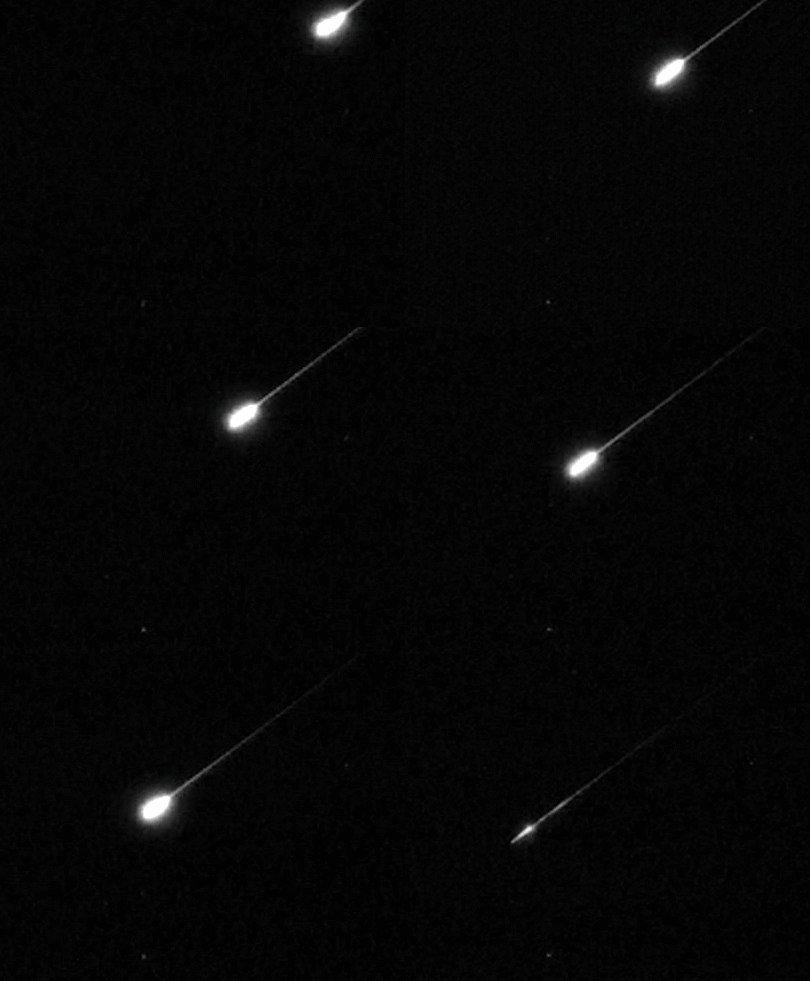
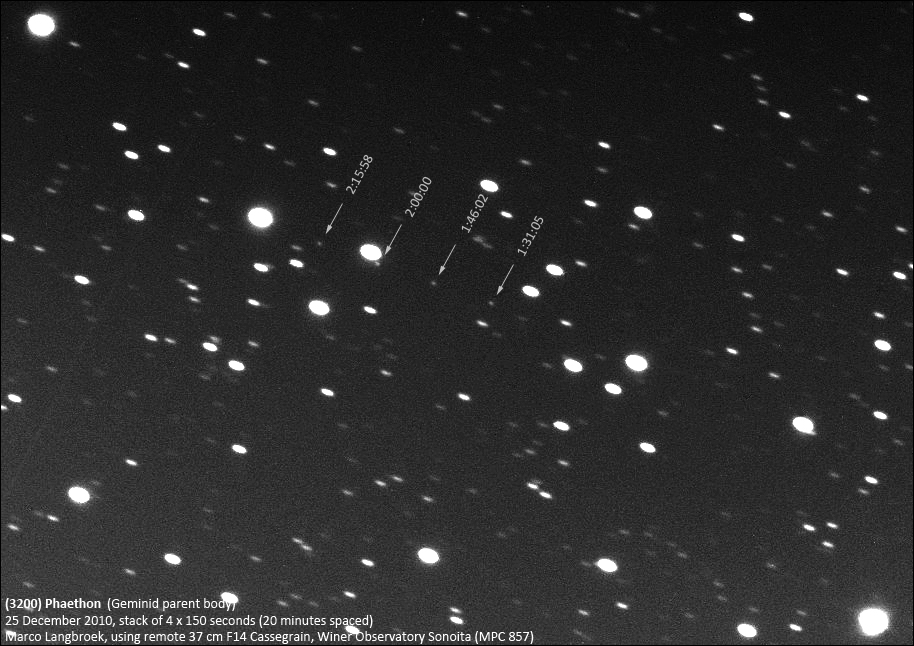
Det spesielle med denne meteorsvermen er at den knyttet til asteroiden 3200 Phaeton og opptrer mest aktiv når Jorda er nærmest banen til denne asteroiden. Denne asteroiden, som ble oppdaget så sent som i 1983, beveger seg innenfor Merkurs bane og ut til Marsbanen i løpet av 523 dager. Den har vært observert med utbrudd av støv fra overflaten som har lagt seg som en hale etter seg og den regnes sammen med noen få andre minikloder som en mellomting av asteroide og komet. Den har altså også lagt etter seg materiale som i dag utgjør Geminidesvermen her på Jorda. Den kan ha opptil 120 stjerneskudd i timen, men det er under de gunstigste observasjonsforhold som klarvær og utstrålingspunktet høyt over horisonten. Det skjer etter midnatt når Løven står høyest på himmelen. Farten er om lag 35 km/s og de er ikke assosiert med direkte nedfall av meteoritter siden disse må vanligvis ha fart mindre eller lik 20 km/s.
In 2025 there is no moon to see when the leonids and geminids have top activity!
https://www.timeanddate.com/astronomy/meteor-shower/geminids.html
What is a meteor and a meteor shower?
Many of the shooting stars showers we see in the night sky are linked to shooting stars that are loose material from famous or missing comets. Direction and speed tell astronomers if they are connected to showers or are «free» or sporadic meteors entering the earth’s atmosphere.
Most shooting shots come from small stones the size of sand grains that hit the atmosphere high up up to tens of kilometers per second. They can thus have a motion energy that surpasses a complete railway car and much of this energy is emitted as light when it is slowed down into the atmosphere. Therefore, these small stones will light up every time they hit the top atmosphere.
In order to hit with fragments on the Earth’ surface, they must be «slow» about 20 km/s and dissolve less than 20 km from the surface approximately.
None of these «winter showers», Leonids iNovembern or Geminids in December have members who gives such an opportunity.
The showers are named after the constellation from which they appear to flow out. This is a perspective effect just like Billys approaching us from the distance in the dark seems to come from a point on the horizon. The leonids appear to come from the constellation Leo and the Geminids from the constellation twins (Gemini).
This year, the two biggest «winter showers» occur while the moon is new and the sky is therefore dark enough to see many shooting stars. It is 3 years since there were such favorable conditions for these two meteor showers.
The Geminids and the asteroid Phaeton
The Geminids are a shooting star shower that is active for large parts of December each year. It was described for the first time 150 years ago and has the greatest activity of 13 and 14 December each year. The moon is new December 18 this year so conditions should be about as good as they were for the leonids a month before.
The special thing about the Geminid meteor shower is that it linked to the asteroid 3200 Phaeton and occurs when the Earth is closest to the path of this asteroid. This asteroid, which was discovered as late as 1983, moves within the Mercuryorbit and out to the orbit of Mars in 523 days.
It has been observed with outpouring of dust from the surface that has settled as a tail behind it and it is considered with a few other small asteroids as an intermediary of asteroid and comet. It has thus also lagged behind material that today constitutes the Geminids here on Earth. It may have up to 120 shooting shots per hour, but it is under the most favorable observation conditions such as clear weather and the radiation point high above the horizon. It happens after midnight when the radiant is highest in the sky. The speed is about 35 km/s and they are not associated with direct falling drop -out of meteorites since these usually have to speed less or equal to 20 km/s.
https://www.timeanddate.com/astronomy/meteor-shower/geminids.html
In 2025 there is no moon to see when Geminids have top activity!
Many of the shooting stars we see in the sky are linked to shooting stars that are loose material from famous or lost comets. Direction and speed tell astronomers as there are swarms or «free» meteors entering the earth atmosphere.
Most shooting shots come from small stones the size of sand grains that hit the atmosphere high up up to tens of kilometers per second. They can thus have a motion energy that surpasses a railway car and much of this energy is emitted as light when it is slowed down into the atmosphere. Therefore, these small stones will light up every time they hit the soil atmosphere.
In order to hit with fragments on the Earth surface, they must be «slow» about 20 km/s and dissolve less than 20 km from the surface approximately.

Tor E Aslesen
leder Norsk meteornettverk
 AstronomiNyheter for deg
Legg igjen en kommentar