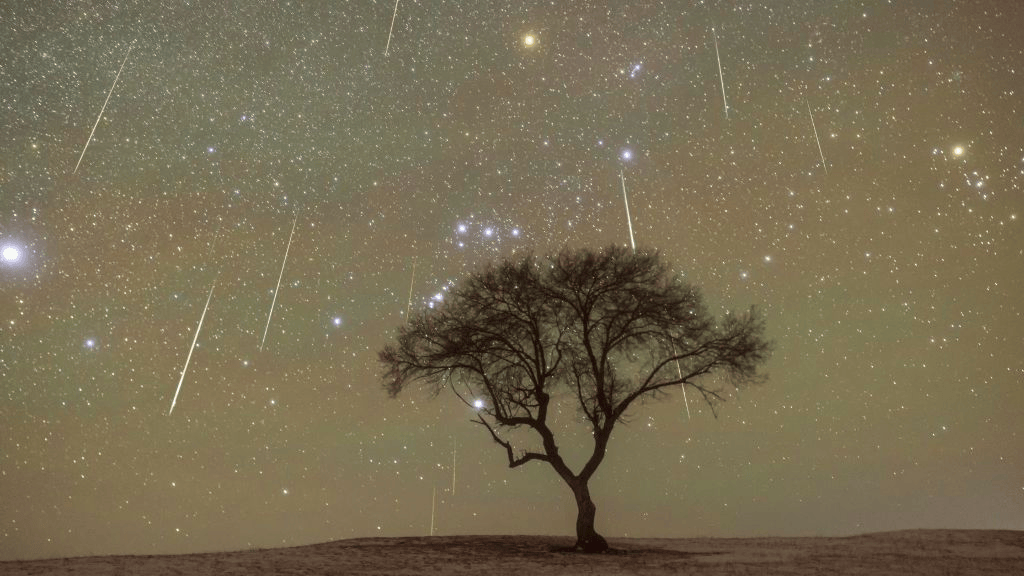
The moon descends early in the evening during the biggest activity
The metor showers get their name after the constellation from which they seem to flow out. This is a perspective effect just like car lights approaching us from the distance in the dark seem to come from a point on the horizon. The Geminides seem to come from the constellation of Gemini or the Twins and come every year in November/December.
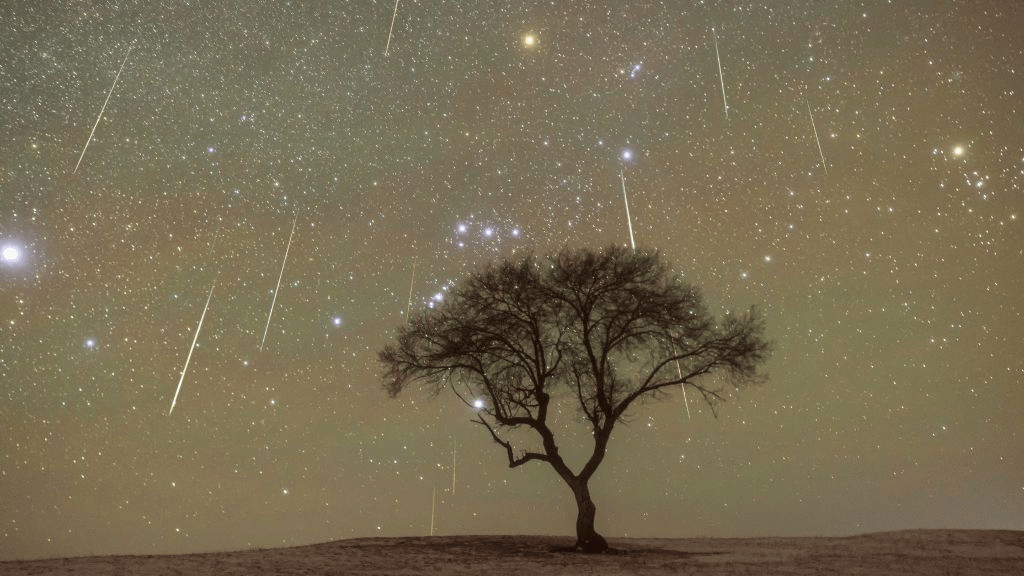
This year, these two biggest “winter showers” occur while the moon is new and the sky is therefore dark enough to see many star shots. It’s been 3 years since there were such favorable conditions to observe this magnificent shower.
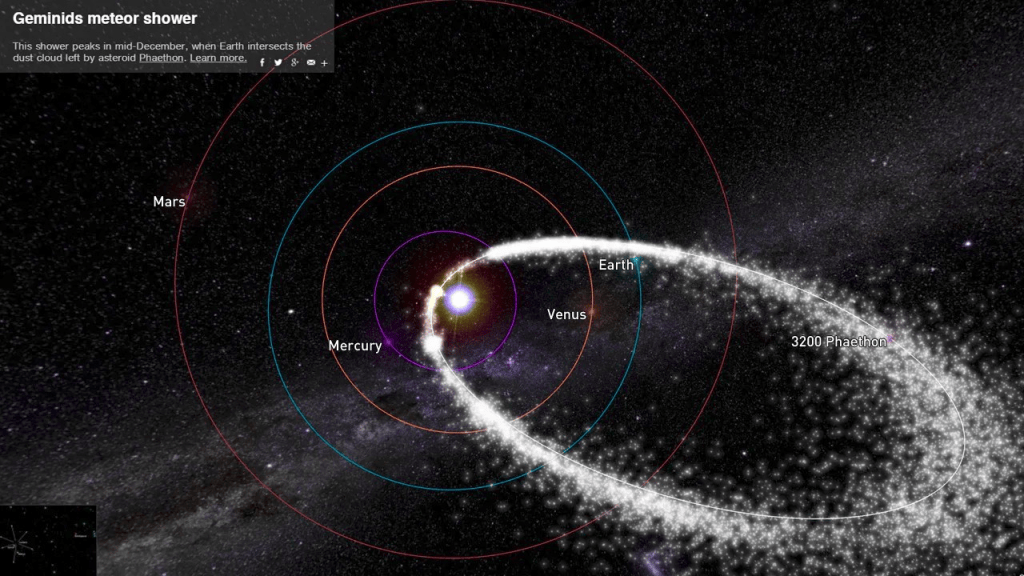
It was first described 150 years ago and has the greatest activity on 13 and 14 December each year. The moon is new on 18 December so conditions should be about as good as for the Leonids a month before. The shower lasts from November 19 to December 24 when the Earth passes through dust and stone from the comet/asteroid 3200 Phaeton, but is strongest in mid-December. The moon goes down early in the evening at this time and it was supposed to make the night long and dark if the weather permits.
The swarm is more favourably placed in the sky than the Leonids which this year were recorded with several good observations of the Norwegian Meteor Network!
The special thing about this meteor shower is that it linked to the asteroid 3200 Phaeton and appears most active when the Earth is closest to the orbit of this asteroid. This asteroid, which was discovered as late as 1983, moves within Mercury’s orbit and out to the Martian Railway within 523 days. It has been observed with bursts of dust from the surface that has settled like a tail behind them and it is counted along with a few other mini-cloths as an intermediate of asteroid and comet. It has therefore also put behind material that today constitutes the Geminide sword here on Earth. It can have up to 120 star shots per hour, but it is under the most favorable observation conditions such as clear weather and the radiance point high above the horizon. It happens after midnight when the Twins (Gemini) are highest in the sky. The speed of the meteors is about 35 km/s when they hit the atmosphere about 100 km up. But they are not associated with the direct fallout of meteorites since these must have speed less or equal to 20 km/s and thus reach the lower part of the stratosphere before breaking.
The Geminids also hit the Moon?
Meteors and meteor showers can also hit our neighbor in space. Such observations can be made on the dark side of the moons when it faces the Earth. But it requires a good telescope and preferably one that follows the moon’s movement in the sky. The moon has no atmosphere so what is seen is that the meteorstone hits the moon’s surface and makes a «hot» impact on the surface. These flashes usually last less than one second so one must be vigilant and preferably be able to film the events.
https://earthsky.org/space/are-geminid-meteors-striking-the-moon-see-videos/

Tor E Aslesen
astrophysicist
Head of the Norwegian Meteor Network


Legg igjen en kommentar