The #Leonids in November
Maximum for the Leonid #meteorite shower is at 17th to 18th of November

In almost all of November, with a maximum of around 17-18, you can see meteors from the Leonid meteor shower. This year it has its maximum near new moon that occurs on November 18. This swarm is linked to the periodic comet 55p/Temple-Tuttle, which was discovered in 1866 and which runs around the sun in an elongated orbit of 33.3 years. It has a path that extends from the Earth to Uranus’ orbit. When the comet is close to the sun and the earth crosses accumulation of the comet residues we can get a very active meteorstorm as it was in 1833, 1866,1966 and 2001. But moonless nights can make us see many of them and maybe some powerful fire ball or bolide. Since the comet is in its closest to the sun when the residues hit the soil, the speed of the pebbles it has parked in its track is up to 71 km/s. This is almost maximum speed for any solar system object crossing the Earth’s orbit. An object can have on the way into the soil atmosphere. It also means that they have short bright lanes that burn up many miles up in the atmosphere. But it happens strong fireballs can be seen from the side some pieces are significantly larger than small grains of sand.
https://www.space.com/34500- leonid- meteor-shower-guide.html
https://www.timeanddate.com/astronomy/meteor-shower/leonids.html
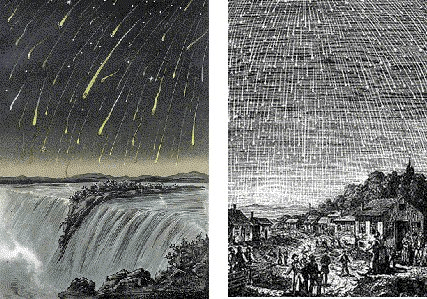
Many of the shower are linked to known comets. For the Leonids part, it’s the comet Tempel-Tuttle that revolves around the sun in 33 years. The comet was discovered in December 1865 by German astronomer William Temple in Marseilles and a few days later in January 1866 by the American astronomer Horace Tuttle of Harvard University’s Observatory. They have both been named to the comet with the official designation 55P/Temple-Tuttle since the discoveries were independent of each other.
In 2031-32, the comet comes back near the Earth and the sun and we can hope for the meteor shower to get an upsurge in 2032 since the star shots seem to hang in large numbers around the mother comet.
Most «shooting stars» come from small rocks the size of sand grains that hit the atmosphere high up by up to tens of kilometers per second. They can thus have a motion energy that surpasses a railway carriage at full speed and much of this energy is emitted as light when it is slowed up downwards in the atmosphere. Therefore, these small stones will light up every time they hit the Earth’s atmosphere.
To hit with fragments on the earth’s surface, they must be «slow» i.e. about 20 km/s and disintegrate less than 20 km from the surface approximately.
The Leonid meteors enter the atmosphere at 71 km/s and therefore they do not come down to the ground in the form of meteorites, but evaporate and pulverize high up in the atmosphere. It’s this collision with the atmosphere that makes the light strips from the meteors.
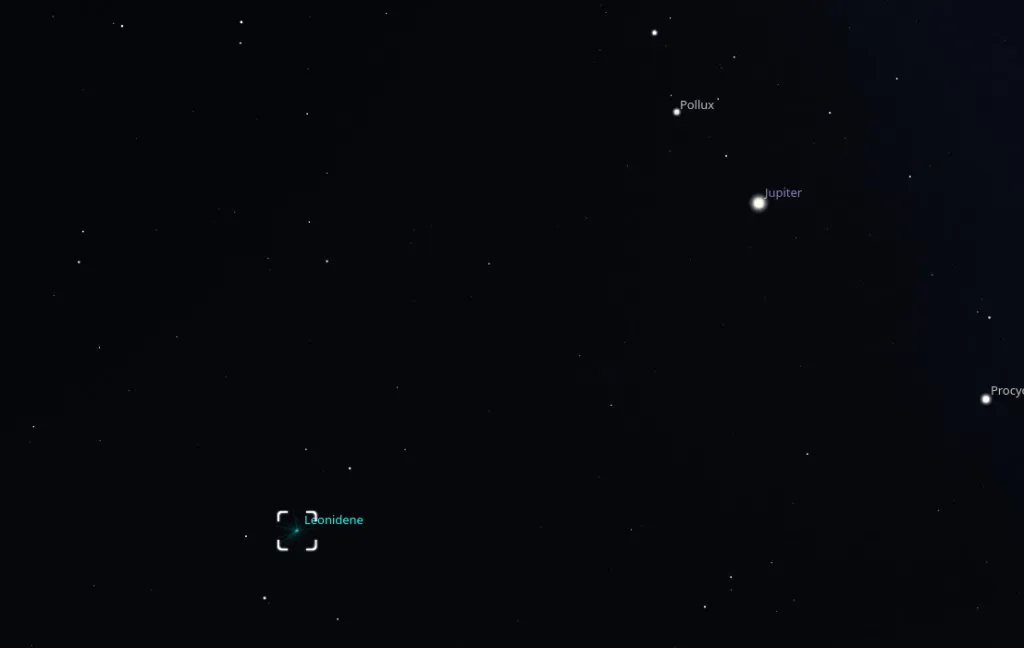
The swarms get their name after the constellation from which they seem to flow out from. This is a perspective effect just like car lights approaching us from the distance in the dark seem to come from a point on the horizon. The Leonids seem to come from the constellation Lion and the Geminids seems to come down from the constellation Twins (Gemini) and come every year in December.

Tor E Aslesen
astrophysisist
chairman,
Norwegian meteorite network


Legg igjen en kommentar